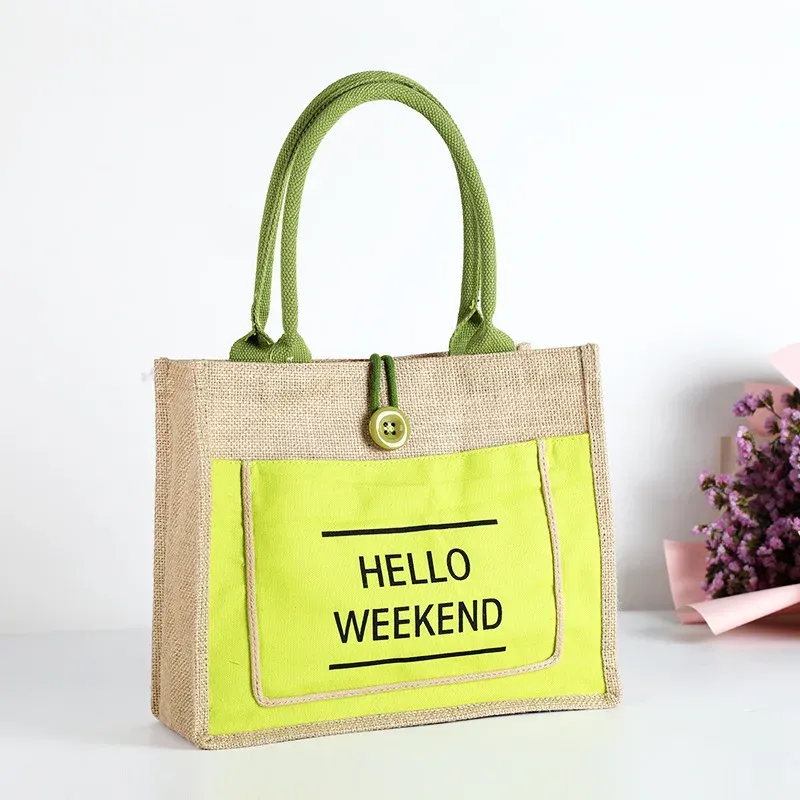
Short answer: custom bag MOQ is set mainly by fabric minimums, custom colors and printing setup. Stock designs with your logo can start from very small quantities, often 2-100 pieces, while fully custom bags usually start around 300-500 pieces per design. You can lower MOQ by using stock fabrics and colors, simple logo methods and fewer variants.
Key takeaways
- MOQ is driven by fabric minimums, custom colors, printing setup and new patterns.
- Stock designs with your logo can start very small; fully custom bags usually need 300-500+ pieces.
- Stock colors, simple logos and fewer variants are the fastest ways to lower MOQ.
- Compare landed cost at several quantities, including freight and setup fees.
Why bag factories have an MOQ
MOQ is not an arbitrary rule. Each custom order has fixed setup costs that must be spread over the pieces:
- Fabric and lining: mills sell custom-dyed or printed fabric by the roll or by minimum meters.
- Printing setup: screen printing needs one screen per color; all-over prints need cylinders or plates.
- Hardware: custom-color zippers, pullers or metal logo plates have their own minimums.
- Pattern and line setup: cutting dies, sewing line setup and training for a new design.
Typical MOQ by order type
| Order type | Typical MOQ | Best for |
|---|---|---|
| Stock design, no logo | Very low, sometimes from 1-2 pcs | Testing a product or market |
| Stock design + your logo | About 50-300 pcs | Promotions, first private-label orders |
| Modified design (ODM) | About 300-500 pcs | Brands wanting a unique look fast |
| Fully custom design (OEM) | About 500+ pcs per design | Established brands, retail programs |
These ranges are a guide. The real MOQ depends on the bag and your choices, so always ask your supplier to explain which item sets it.
7 ways to lower your MOQ
- Use stock fabric colors. Custom Pantone dyeing is the biggest MOQ driver.
- Pick a simple logo method. A one-color screen print or a woven label needs less setup than all-over printing.
- Reduce variants. Two colors of 300 pieces each are easier than six colors of 100.
- Start from an existing design. ODM skips pattern development.
- Share materials across styles. Using the same fabric for a tote and a pouch combines fabric quantity.
- Accept a small surcharge. Many factories will run below MOQ for a per-piece premium.
- Plan repeat orders. A clear forecast helps the factory buy materials efficiently.
MOQ vs unit price
Unit price normally drops as quantity rises because setup costs are spread over more pieces and materials are bought in larger lots. When comparing quotes, ask for price breaks at several quantities, for example 300, 1,000 and 3,000 pieces.
Real examples: how buyers lowered their MOQ
A promotional agency needed 200 branded cotton tote bags for a trade show. A fully custom bag in a Pantone-matched fabric would have required a much larger fabric order. Choosing a stock natural canvas tote with a one-color screen print kept the order at 200 pieces and cut the lead time, because no fabric had to be dyed.
An Amazon seller wanted to launch insulated lunch bags in five colors. Instead of five custom colors at full MOQ each, they started with three stock colors and their woven label, tested the market, then added custom colors only for the best seller in the second order.
A fashion brand wanted a unique quilted puffer tote. They started from an existing ODM pattern, changed the fabric, lining and hardware color, and added a metal logo plate. Skipping pattern development made the first order smaller and faster than a new design.
Hidden costs to watch when ordering below MOQ
Ordering less than the standard minimum is often possible, but check what changes:
- Higher unit price: setup costs are shared by fewer pieces.
- Fabric leftovers: some factories charge for the unused part of a fabric roll.
- Printing setup fees: screens, plates or molds may be charged separately on small runs.
- Freight per piece: small shipments often go by express or LCL sea freight, which costs more per unit than a full container.
- Lead time: small orders are sometimes scheduled between larger runs.
Ask for a full landed-cost comparison at two or three quantities. Sometimes ordering a slightly larger quantity is cheaper overall once freight and setup are included.
How to ask for an MOQ quote
Give the supplier enough information to quote accurately the first time:
- Reference photo or drawing and target size
- Preferred fabric, or “open to suggestions for lowest MOQ”
- Logo file, size and method
- Number of colors and quantity per color
- Packaging needs, such as polybag, barcode or retail box
- Destination country and target delivery date
Then ask directly: “Which of my choices sets the MOQ, and what would you change to lower it?” A helpful supplier will answer clearly.
MOQ for repeat orders
Once a design is approved and the pattern exists, repeat orders are usually easier. The factory already knows the construction, has the cutting templates and may have leftover material from the first run. That often means a lower MOQ, a shorter lead time and more stable quality than the first order.
To make repeat orders smooth, keep a record of the approved sample, the final specification and the packaging details. Share a sales forecast with your supplier when you can, even a rough one. A forecast lets the factory reserve fabric and production time, which protects you during busy seasons such as the months before Christmas, back-to-school and summer.
Finally, remember that the cheapest order is not always the smallest one. A realistic first quantity that covers your launch, samples for marketing and a small safety stock usually works out better than several tiny emergency reorders.
FAQ
What is Homein’s MOQ?
It depends on the product. Many of our stock designs start from 2-100 pieces with your logo; fully custom bags usually start from 300-500 pieces per design. Each product page shows its standard MOQ.
Can I mix colors to reach the MOQ?
Often yes, if the colors are stock fabrics. Custom-dyed colors usually need their own minimum.
Does the sample count toward the MOQ?
No. Samples are made separately before bulk production so you can approve quality first.
Not sure which option fits your budget? Tell us your quantity and we will suggest the most cost-effective way to start. Browse our product catalog to see stock designs.
Need a custom bag supplier?
Homein has manufactured custom bags in Ningbo, China since 2011. Send your design and get price, MOQ and a sample plan within 24 hours.